Objective sensor data for prosthetic rehabilitation
Bio6 provides wearable EMG and motion sensing tools designed to support prosthetic rehabilitation programs and human-machine interface research.
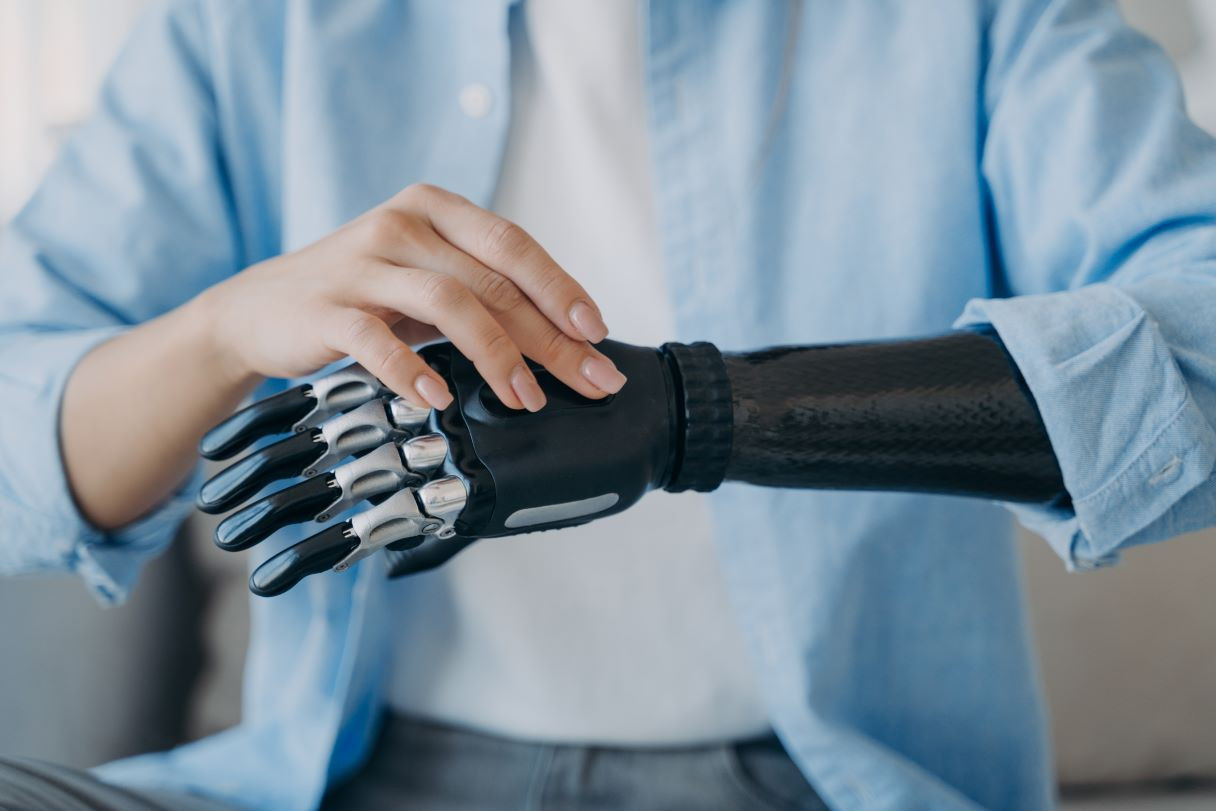
Built for prosthetic rehabilitation and research
Bio6 provides clinicians and researchers with objective biometric data throughout the prosthetic rehabilitation process. Wearable sensors capture EMG signals, movement patterns, and biomechanical data to support evidence-based care.
Teams can monitor prosthetic control performance, track rehabilitation progress over time, and generate structured outcome reports — all within a single platform.
Bio6 also supports human-machine interface research by providing reproducible, structured datasets for prosthetic control studies.
Capture prosthetic control signals
Analyse EMG signals and muscle activation patterns used to operate prosthetic devices. Evaluate signal quality, timing, and control strategy performance across sessions.
Monitor movement and biomechanics
Measure arm movement, joint angles, and motion patterns during prosthetic use. Understand how control signals translate into real functional movement outcomes.
Track rehabilitation progress
Monitor how prosthetic users regain mobility and coordination during rehabilitation programs. Track functional improvements and therapy outcomes over time with objective data.
Support human–machine interface research
Provide structured datasets for research in prosthetic control and human-machine interfaces. Study how users interact with assistive technologies to inform system design.
How Bio6 supports prosthetic innovation and rehabilitation
PROSTHETIC CONTROL ANALYSIS
Prosthetic Control Analysis
Capture and analyse muscle signals and control inputs used to operate prosthetic devices. Bio6 helps researchers evaluate signal quality, activation timing, and control strategies.
- EMG signal analysis
- Muscle activation patterns
- Control signal interpretation
BIOMECHANICS MONITORING
Movement & Biomechanics Monitoring
Measure arm movement, joint angles, and motion patterns when using prosthetic devices. Understand how prosthetic control translates into real functional movement.
- Range of motion
- Movement symmetry
- Biomechanical motion analysis
REHABILITATION TRACKING
Rehabilitation Progress Tracking
Monitor how prosthetic users regain mobility and coordination during rehabilitation. Track functional improvements and therapy outcomes over time.
- Functional task performance
- Movement quality analysis
- Rehabilitation progress metrics
RESEARCH SUPPORT
Human–Machine Interaction Research
Study how users interact with assistive technologies and prosthetic systems. Bio6 provides structured datasets for research in prosthetic control and human-machine interfaces.
- Prosthetic control experiments
- Signal classification research
- Interaction modelling
Evaluate prosthetic performance in real rehabilitation scenarios
Bio6 enables teams to analyse prosthetic control and user performance in real rehabilitation environments. By combining wearable sensing and motion analytics, clinicians and researchers can observe how users adapt to prosthetic devices during functional tasks and therapy sessions.
This approach helps improve prosthetic design, optimise control algorithms, and develop more effective rehabilitation strategies.
Baseline biometric assessment
Capture EMG signal profiles, muscle activation patterns, and baseline movement data before prosthetic training begins.
Prosthetic control evaluation
Analyse control signal quality, activation timing, and strategy performance during initial prosthetic use and therapy.
Monitor rehabilitation progress
Track functional task performance, movement quality, and rehabilitation outcomes across sessions.
Generate outcome reports
Produce structured reports documenting prosthetic control performance and rehabilitation progress for clinical and research use.
Objective data across the prosthetic rehabilitation pathway
EMG signal analysis
Capture and analyse muscle activation signals used to control prosthetic devices. Evaluate signal quality, activation timing, and control strategy consistency across sessions.
Movement & biomechanics monitoring
Measure arm movement patterns, joint angles, and motion symmetry during prosthetic use to understand how control signals translate into functional movement.
Functional task performance
Evaluate how prosthetic users perform standardised functional tasks during rehabilitation. Track improvement in task completion quality and movement efficiency over time.
Structured research datasets
Generate reproducible, structured movement and signal datasets for prosthetic control research, signal classification, and human-machine interaction studies.
Transradial prosthetic — EMG control study
A patient at Week 8 of their transradial prosthetic rehabilitation. Bio6 tracks EMG signal quality, control accuracy, and session adherence in one unified view.
Active Subjects
J. Martin — Week 8
Transradial prosthetic · EMG control · Adherence 94%
EMG Signal Amplitude
Signal Quality
92%
+6% vs W4
Control Acc.
87%
+9% vs W4
Adherence
94%
Excellent
Sessions
8
Completed
Real-time EMG capture
BioBand streams muscle activation signals throughout the session — no post-processing lag.
Week-over-week trends
Clinicians instantly see whether signal quality and control accuracy are improving across sessions.
Exportable reports
One-click PDF reports for clinical notes, research publications, or multi-site data sharing.
Built for prosthetics research and rehabilitation teams
Bio6 supports organisations working at the intersection of prosthetic technology, rehabilitation science, and human-machine interaction.
Frequently asked questions
Build rehabilitation programs that evolve with your patients
Move from subjective observation to measurable, data-driven care. Bio6 helps clinicians deliver better outcomes with less friction.