Suivi objectif pour la réadaptation gériatrique
Bio6 aide les cliniciens à évaluer l'équilibre, la mobilité et le déclin fonctionnel chez les personnes âgées, à suivre la récupération et à prévenir les chutes avec des flux de travail structurés et des données de mouvement objectives optionnelles.
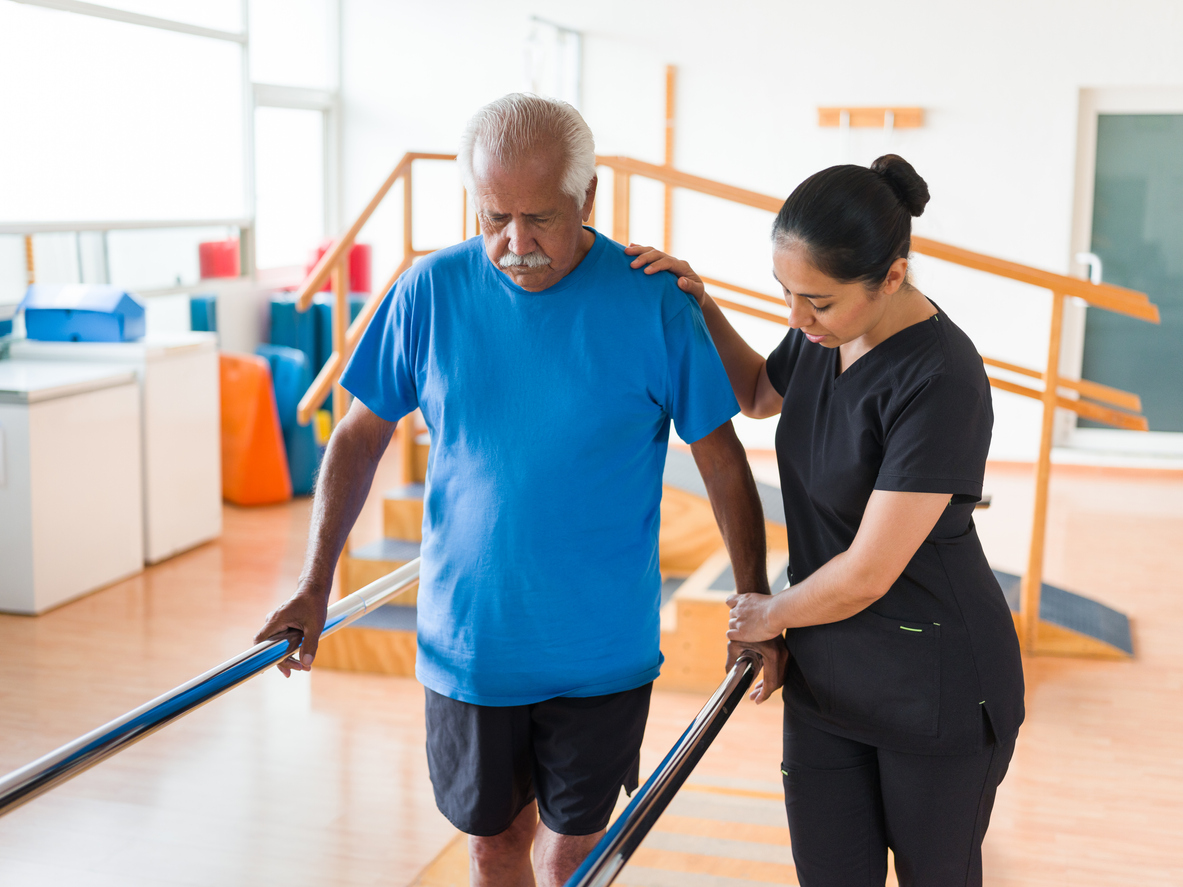
Défis en réadaptation gériatrique
Les personnes âgées connaissent souvent une mobilité réduite, des troubles de l'équilibre et un risque accru de chute. Les cliniciens doivent surveiller attentivement le déclin fonctionnel pour soutenir un vieillissement plus sûr et maintenir l'indépendance.
Cependant, le déclin subtil est difficile à détecter précocement, les progrès sont difficiles à quantifier entre les séances, et le risque de chute est souvent évalué subjectivement par l'observation clinique seule.
Bio6 permet un suivi structuré et une mesure objective de la mobilité et de l'équilibre pour soutenir la réadaptation gériatrique.
Détecter le déclin précoce
Identifiez les petits changements de mobilité et d'équilibre avant qu'une détérioration majeure ne se produise : permettant une intervention plus précoce et des résultats plus sûrs.
Mesurer l'équilibre et la stabilité
Quantifiez le contrôle postural et les indicateurs de risque de chute objectivement à chaque séance pour suivre l'efficacité de l'entraînement à l'équilibre.
Suivre l'indépendance fonctionnelle
Surveillez la capacité à effectuer des mouvements quotidiens au fil du temps : fournissant aux cliniciens des preuves objectives d'amélioration ou de déclin.
Prévenir les chutes de manière proactive
Utilisez des données objectives de marche et d'équilibre pour ajuster les interventions avant que des incidents de chute ne se produisent : réduisant le risque à chaque étape de la réadaptation.
Évaluation du risque de chute chez un patient âgé
Un patient âgé présente un équilibre réduit et une instabilité croissante. Bio6 fournit des données objectives pour identifier les facteurs de risque de chute et guider l'intervention ciblée.
Évaluation
Évaluation de la mobilité et de l'équilibre gériatrique
Les capteurs BioBand capturent des données biomécaniques objectives lors d'une évaluation standardisée de la mobilité et de l'équilibre :
- Vitesse et cadence de marche
- Stabilité de l'équilibre (statique et dynamique)
- Distribution du poids
- Performance assis-debout
Vitesse de marche
0.82 m/s
Sous le seuil
Score d'équilibre
Faible
Instabilité détectée
Distribution du poids
60% droit / 40% gauche. Appui réduit sur le côté gauche pendant la phase d'appui.
Vitesse de marche : entre les séances
Aperçu clinique
Le clinicien introduit un entraînement à l'équilibre et des exercices de renforcement pour réduire le risque de chute et améliorer la distribution du poids.
Un flux de travail proactif de réadaptation gériatrique
De l'évaluation initiale de la mobilité au suivi à long terme et à la prévention des chutes.
Évaluer la base de mobilité et d'équilibre
Capturez la vitesse de marche, la stabilité de l'équilibre et le mouvement fonctionnel au début de la réadaptation en utilisant des données de mouvement objectives.
Identifier les facteurs de risque de chute
Analysez la variabilité de la marche, l'asymétrie du poids et les schémas d'instabilité pour identifier les facteurs de risque de chute nécessitant une intervention ciblée.
Mettre en œuvre des interventions ciblées
Concevez des programmes d'entraînement à l'équilibre, d'exercices de renforcement et de mouvement fonctionnel basés sur des données de base objectives : pas seulement sur l'observation.
Surveiller la progression et la stabilité
Suivez les améliorations de l'équilibre, de la marche et de l'indépendance fonctionnelle séance après séance et ajustez le programme au fur et à mesure que le patient progresse.
Évaluer la base de mobilité et d'équilibre
Capturez la vitesse de marche, la stabilité de l'équilibre et le mouvement fonctionnel au début de la réadaptation en utilisant des données de mouvement objectives.
Identifier les facteurs de risque de chute
Analysez la variabilité de la marche, l'asymétrie du poids et les schémas d'instabilité pour identifier les facteurs de risque de chute nécessitant une intervention ciblée.
Mettre en œuvre des interventions ciblées
Concevez des programmes d'entraînement à l'équilibre, d'exercices de renforcement et de mouvement fonctionnel basés sur des données de base objectives : pas seulement sur l'observation.
Surveiller la progression et la stabilité
Suivez les améliorations de l'équilibre, de la marche et de l'indépendance fonctionnelle séance après séance et ajustez le programme au fur et à mesure que le patient progresse.
Explorez les rapports de réadaptation gériatrique
Bio6 génère des rapports structurés qui visualisent les progrès de la marche, les améliorations de l'équilibre et les indicateurs de risque de chute entre les séances.
Séance 1
0.72 m/s
Séance 6
0.91 m/s
Tendance de la vitesse de marche
Résultats de réadaptation gériatrique basés sur les données
Bio6 donne aux cliniciens des résultats précis et mesurables pour soutenir la prévention des chutes et l'indépendance fonctionnelle.
Réduction du risque de chute
Les données objectives d'équilibre et de marche aident les cliniciens à identifier et à traiter les facteurs de risque de chute de manière proactive : avant que des incidents ne se produisent.
Amélioration de l'équilibre et de la mobilité
Suivez les améliorations du contrôle postural et de la stabilité de la marche entre les séances. Fournissez aux patients et aux familles des preuves claires de progrès.
Indépendance accrue
Surveillez la capacité de mouvement fonctionnel au fil du temps : permettant aux cliniciens de soutenir les patients dans le maintien de leur indépendance plus longtemps.
Suivi à long terme du déclin
Générez des rapports longitudinaux suivant la mobilité et l'équilibre sur des périodes prolongées : essentiels pour la planification des soins à long terme et la documentation.
“Bio6 a transformé la façon dont nous surveillons le risque de chute chez nos patients gériatriques. Nous pouvons maintenant suivre des changements subtils d'équilibre et de mobilité que nous ne pouvions pas détecter auparavant.”

Finissez la journée avec les notes rédigées et les progrès démontrés
Trente minutes, en français, sur vos propres cas : votre gabarit de note, vos rapports CNESST. Puis vous décidez.
Sans engagement · une démonstration de 30 minutes adaptée à votre clinique.
CE QUE ÇA INCLUT
Opérations, soins et intelligence clinique : un seul dossier, fondé sur la mesure
De la réservation à la facturation, sans ressaisie
Horaire, dossier patient et facturation partagent le même fichier : la journée avance sans ressaisir noms, codes ou notes.
Explorer les opérations cliniques →Sachez qui a fait ses exercices : avant l'arrivée en salle
Assignez le programme à domicile depuis la séance; l'adhérence et la douleur reviennent au dossier, et la prochaine visite commence informée.
Explorer les soins cliniques →Répondre à « est-ce que ça fonctionne? » avec une courbe, pas une impression
Amplitude, symétrie et douleur tracées séance après séance : des preuves pour le patient, le médecin et l'assureur.
Explorer l'intelligence clinique →