Objective monitoring for geriatric rehabilitation
Bio6 helps clinicians assess balance, mobility, and functional decline in older adults, track recovery, and prevent falls with structured workflows and optional objective movement data.
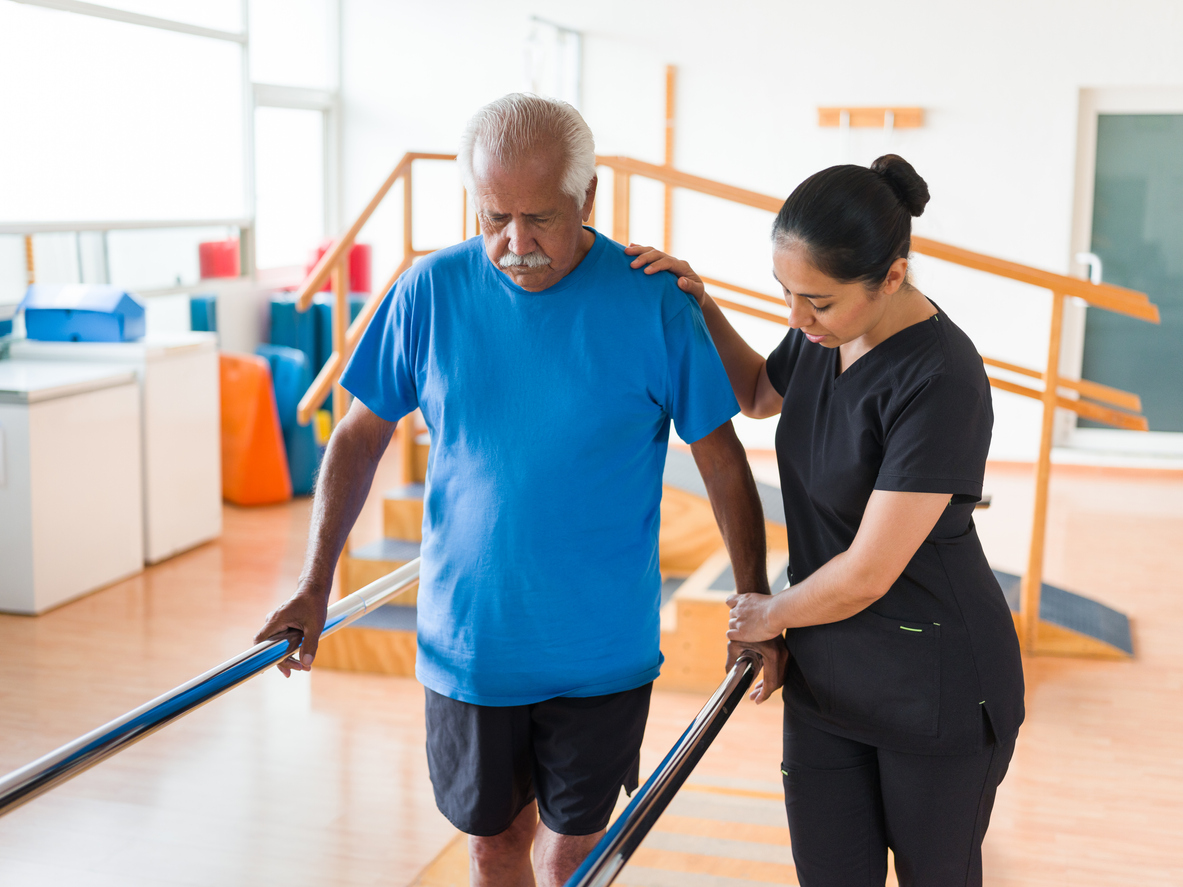
Challenges in geriatric rehabilitation
Older adults often experience reduced mobility, balance impairments, and increased fall risk. Clinicians must monitor functional decline carefully to support safer ageing and maintain independence.
However, subtle decline is hard to detect early, progress is difficult to quantify across sessions, and fall risk is often evaluated subjectively using clinical observation alone.
Bio6 enables structured monitoring and objective measurement of mobility and balance to support geriatric rehabilitation.
Detect early decline
Identify small changes in mobility and balance before major deterioration occurs: enabling earlier intervention and safer outcomes.
Measure balance and stability
Quantify postural control and fall risk indicators objectively across every session to track the effectiveness of balance training.
Track functional independence
Monitor the ability to perform daily movements over time: providing clinicians with objective evidence of improvement or decline.
Prevent falls proactively
Use objective gait and balance data to adjust interventions before fall incidents occur: reducing risk at every stage of rehabilitation.
Fall risk assessment in elderly patient
An elderly patient presents with reduced balance and increasing instability. Bio6 provides objective data to identify fall risk factors and guide targeted intervention.
Assessment
Geriatric mobility and balance assessment
BioBand sensors capture objective biomechanical data during a standardised mobility and balance assessment:
- Gait speed and cadence
- Balance stability (static and dynamic)
- Weight distribution
- Sit-to-stand performance
Gait speed
0.82 m/s
Below threshold
Balance score
Low
Instability detected
Weight distribution
60% right / 40% left. Reduced weight bearing on left side during stance phase.
Gait speed: across sessions
Clinical insight
Clinician introduces balance training and strength exercises to reduce fall risk and improve weight distribution.
A proactive geriatric rehabilitation workflow
From initial mobility assessment to long-term monitoring and fall prevention.
Assess mobility and balance baseline
Capture gait speed, balance stability, and functional movement at the start of rehabilitation using objective movement data.
Identify fall risk factors
Analyse gait variability, weight asymmetry, and instability patterns to identify which fall risk factors require targeted intervention.
Implement targeted interventions
Design balance training, strength exercises, and functional movement programs based on objective baseline data: not observation alone.
Monitor progression and stability
Track improvements in balance, gait, and functional independence session over session and adjust the program as the patient progresses.
Assess mobility and balance baseline
Capture gait speed, balance stability, and functional movement at the start of rehabilitation using objective movement data.
Identify fall risk factors
Analyse gait variability, weight asymmetry, and instability patterns to identify which fall risk factors require targeted intervention.
Implement targeted interventions
Design balance training, strength exercises, and functional movement programs based on objective baseline data: not observation alone.
Monitor progression and stability
Track improvements in balance, gait, and functional independence session over session and adjust the program as the patient progresses.
Explore geriatric rehabilitation reports
Bio6 generates structured reports that visualise gait progress, balance improvements, and fall risk indicators across sessions.
Session 1
0.72 m/s
Session 6
0.91 m/s
Gait speed trend
Data-driven geriatric rehabilitation outcomes
Bio6 gives clinicians precise, measurable outcomes to support fall prevention and functional independence.
Fall risk reduction
Objective balance and gait data helps clinicians identify and address fall risk factors proactively: before incidents occur.
Improved balance and mobility
Track postural control and gait stability improvements across sessions. Provide patients and families with clear evidence of progress.
Increased independence
Monitor functional movement ability over time: enabling clinicians to support patients in maintaining independence for longer.
Long-term monitoring of decline
Generate longitudinal reports tracking mobility and balance over extended periods: essential for long-term care planning and documentation.
“Bio6 has transformed how we monitor fall risk in our geriatric patients. We can now track subtle changes in balance and mobility that we couldn't detect before.”

Finish the day with the notes done and the progress proven
Thirty minutes, in English or French, on your own cases: your note template, your CNESST reports. Then you decide.
No obligation · a 30-minute walkthrough tailored to your clinic.
WHAT IT INCLUDES
Operations, care and clinical intelligence: one record, built on measurement
From booked to billed, without re-entry
Schedule, patient record and billing share one file: the day moves without retyping names, codes or notes.
Explore Clinical Operations →Know who did their exercises: before they're on your table
Assign the home program from the session; adherence and pain come back into the record, so the next visit starts informed.
Explore Clinical Care →Answer “is it working?” with a trend, not a feeling
Range, symmetry and pain charted session over session: evidence for the patient, the physician and the payer.
Explore Clinical Intelligence →